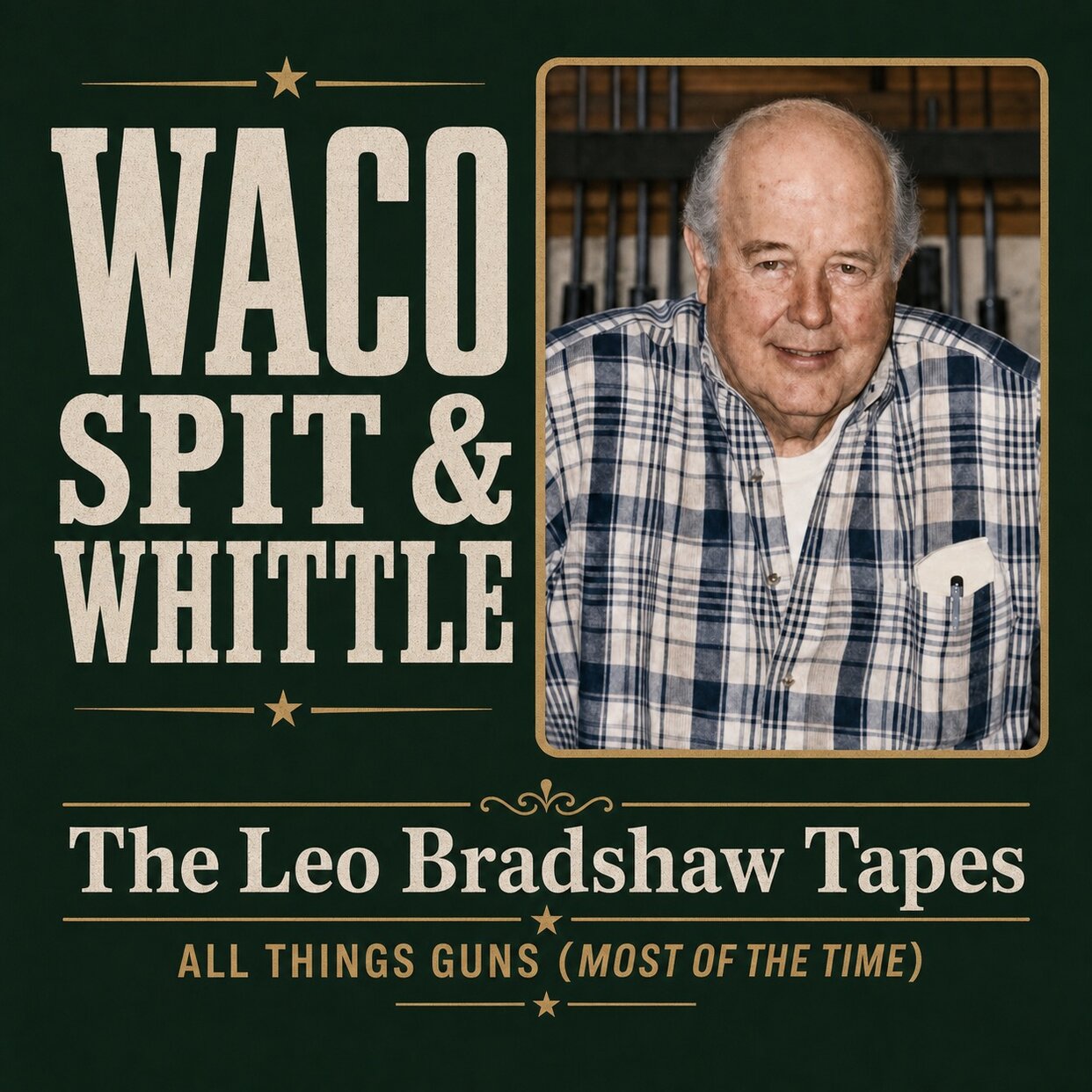
Episode 1 opens the Waco Spit & Whittle with Leo Bradshaw sharing the story behind the shop’s legendary gathering place and answering questions from listeners near and far. The conversation covers youth hunting rifles and shotguns, trigger pull, .223 versus 5.56, old cartridge identification, the Waco/Branch Davidian questions that still follow him, and the firearms that shaped his lifelong collecting passion.
It’s a thoughtful introduction to Leo’s knowledge, personality, and Texas firearms history.
- The origin of “Spit & Whittle.”
- Youth shooting and trigger pull safety.
- .223 Remington vs. 5.56 NATO.
- Leo’s Waco/Branch Davidian perspective.
- U.S. gun manufacturers.
- The .44 Henry Flat cartridge.
- Fixing an old .22 Magnum revolver.
- Starter guns for a 9-year-old.
- Leo’s favorite firearm: the Winchester 1873.
- Respect for the Colt Single Action Army.
This series is dedicated to preserving the stories, experience, and counsel of Leo H. Bradshaw Jr. for his family, friends, and the broader firearms community.
Leo dedicates the conversation to Harley Berg, the beloved Texas game warden and television host whose Sunday show on KWTX taught generations of Waco families about wildlife, youth shooting, and safety. Leo shares personal hunting stories with Harley, including his legendary dove shooting with a .410 and the way he approached shooting as a means of feeding his family.
From there, Leo answers listener questions on Savage Arms and the Model 110, the 5.7×28 caliber for concealed carry, cleaning up screw holes and sights on Remington 700 barrels, muzzle brakes and their pros and cons, the mystique of pre-64 Winchester Model 70 actions, AR-15 full-auto myths and modern “rapid fire” stock devices, replacement parts for older H&R guns, and why some pistols run full metal jacket but choke on hollow points. It’s a rich mix of Texas gun history, practical advice, and stories about the people behind the guns.
- Dedication to Harley Berg and his KWTX TV show.
- Youth shooting, safety, and starting kids in the outdoors.
- Savage Arms history and the Model 110 bolt-action rifles.
- 5.7×28 stopping power and concealed carry considerations.
- Cleaning up sight screw holes and barrel appearance on Remington 700.
- Muzzle brakes, recoil reduction, and noise issues (including PH complaints in Africa).
- Pre-64 Winchester Model 70 action and why it’s prized in custom rifles.
- AR-15 full-auto myths, early Colt frames, and modern “bump-style” devices.
- Finding parts for older H&R Model 1098 guns.
- Diagnosing pistols that jam on JHP but run fine on FMJ.
This series is dedicated to preserving the stories, experience, and counsel of Leo H. Bradshaw Jr. for his family, friends, and the broader firearms community.
Leo and Jeb dedicate the conversation to “the good bishop,” Rayford High from the piney woods of East Texas — an Episcopal bishop, devoted hunter, and longtime friend whose love of ducks, Lake Waco, and good guns defined his outdoor life. Leo answers the bishop’s “ethical” question about whether to sell a well-kept .30-06 at his original cost or at today’s fair value, and then advises him on using a Winchester pre-64 .30-30 with Remington Managed-Recoil 125-grain loads for wild hogs, stressing shot placement and practical ranges.
From there, Leo turns to modern questions: choosing an AR-15 as a first semi-automatic rifle, buying .223/5.56 ammo in bulk, the explosion of AR accessories and pricing over time, and the evolution of Weatherby Mark V rifles from German to Japanese to U.S. manufacture and how their accuracy and collectability compare.
He closes with a remarkable story from Clifton, Texas, where a visit to old friends leads to two extraordinary Purdey over-under shotguns in elephant-hide and exotic cases — guns so fine he says he could have bought a house for what he paid, and yet they still sold quickly to the right buyers. It’s another mix of Texas characters, honest gun ethics, and high-end shotgun lore from Leo’s decades in the trade.
This series is dedicated to preserving the stories, experience, and counsel of Leo H. Bradshaw Jr. for his family, friends, and the broader firearms community.
Leo dedicates the conversation to his longtime friend Lacy Clifton — one of the finest men Waco ever produced — remembering his days at Barnes Drug Company wholesaling guns, ammo, and tackle, his support of Ducks Unlimited, and his enviable duck lease just outside town where hunters could meet him for breakfast, get their blind assignments, and be shooting birds within minutes.
From there, Leo turns to listener questions: a childhood single-shot Sheridan knock-about .22 pistol and its place in Sheridan’s firearm history, the Colt 1877 Lightning double-action revolver and why its condition so strongly drives value, and what little he can (and can’t) say about Ehlers revolvers. He explains why the Colt 1903 and 1908 automatic pistols in .32 and .380 ACP remain some of the finest, most reliable early semi-autos, then answers practical shotgun questions about shortening a Benelli Nova barrel versus swapping for a factory 26-inch tube and what makes Beretta and Benelli semiautos feel so “feather-light.”
Leo closes with his well-known cautionary story about .380 ACP and self-defense — why he jokes he’d rather have a sling shot than a .380, how bullet placement is everything, and why he often favors 9mm or even .22 Magnum hollow points over tiny .380 pocket guns. It’s another episode blending Waco duck-blind memories, niche Colt and Sheridan lore, and hard-earned opinions on modern small-frame handguns.
This series is dedicated to preserving the stories, experience, and counsel of Leo H. Bradshaw Jr. for his family, friends, and the broader firearms community.
Leo and Jeb dedicate the conversation to Ross “Pop” Brown, a burly, kind Waco character who ran Farmer Supply, sold Farmall equipment, and was a close friend of Leo’s parents; Leo remembers Pop’s family, his nickname, and the way their households grew up together.
From there, Leo answers Winchester 1873 questions from listener Robert Waddell, explaining why .44-40 rifles and carbines are among the most desirable ’73s, how matching .44-40, .38-40, and .32-20 handgun and rifle calibers served frontier cowboys, and why Winchester offered so many calibers and barrel lengths — it was marketing then just like it is now. He moves into Colt .45 lore, distinguishing the old .45 Colt revolver cartridge from the .45 ACP in the 1911, recounting how the .45 ACP was developed after the Moro insurrection when .38 sidearms proved inadequate, why the .45 served as America’s sidearm through two world wars, and how its relatively modest velocity is offset by tremendous on-target energy. Leo answers questions about 1911 rifling direction, confirms that Colt does build 1911-pattern pistols in 9mm, and offers practical guidance on shooting vintage 9mm ammunition — when old surplus is fine and when machine-gun loads should be avoided.
The episode then turns to an old New Baker double-barrel 12-gauge and where to hunt for a missing hammer via parts houses like Numrich and Jeff Lee, before closing with Leo’s vivid memories of early WD-40 demos in his shop and why, despite its impressive insulating properties, he does not recommend it as a gun lubricant — preferring Remington’s Rem-Oil and acknowledging that many shooters swear by alternatives like synthetic motor oil.
This series is dedicated to preserving the stories, experience, and counsel of Leo H. Bradshaw Jr. for his family, friends, and the broader firearms community.
Leo and Jeb dedicate the conversation to Bill “Pearly” Sullins, a Waco insurance man, loyal friend to Leo’s parents and grandparents, and legendary Pearl Beer devotee who hunted and shot skeet with Leo’s dad; Leo shares a colorful emergency-room story that captures Pearly’s personality and love of a good time.
From there, Leo answers a listener question from Las Vegas about choosing a shotgun for sporting clays, explaining why over-and-unders dominate the sport, why guns like Beretta, Caesar Guerini, Perazzi, and Browning Citori are so popular, the importance of screw-in chokes for changing patterns on different stations, and typical barrel lengths from 30 to 32 inches with some 34-inch guns in the mix. He discusses Italian makers like Fausti, their quality, and their role in building private-label doubles, including Ducks Unlimited’s 2013 gun of the year. The episode then turns to home-defense shotguns: Leo outlines his preferred pump guns — the Remington 870 with extended magazine tube and Mossberg 500-series — compares 12-gauge and 20-gauge for men and women, mentions semi-autos like the Benelli M4, and explains why he favors number-four buckshot in 12-gauge and heavy number-three loads or larger birdshot in 20-gauge.
Leo next addresses high-end rifle makers Dakota and Cooper, tracing Dakota’s safari-grade bolt-action rifles and calibers up through .416, and describing Cooper’s evolution from small calibers like .22 and .17 HMR to larger rifles, including a stunning, case-colored 17 HMR Cooper he calls the most beautiful gun he has ever handled. He closes with practical rifle-cleaning advice: using one-piece rods, bore guides when possible, brass brushes, solvents like Shooter’s Choice or the classic Hoppe’s No. 9, and finishing with dry patches — plus the story of a friend who hung a Hoppe’s-soaked patch in his shop every morning so customers would know by the smell they were in a gun store.
This series is dedicated to preserving the stories, experience, and counsel of Leo H. Bradshaw Jr. for his family, friends, and the broader firearms community.
Leo and Jeb dedicate the conversation to Dr. Joe Jaworski, a prominent Waco surgeon, great friend of Leo’s parents and grandparents, and serious hunter whose adventures stretched from Africa and India to Alaska and a longtime deer lease at Junction with his wife Madge and Leo’s family. Leo recalls Jaworski’s giant cigars, his brother’s role as a chief prosecutor in the Nuremberg Trials, and the way Joe approached guns as tools rather than collectibles.
From there, Leo answers a long-range question from Bob Keech about .308 versus .30-06 and .270, explaining why .308 was adopted by the U.S. military, how it compares to .30-06 for whitetail and medium game, and why the 300 Winchester Magnum and .338 Lapua have largely replaced .308 in modern military sniper roles, with documented kills out to two miles. He then walks listener James Key through choosing a rifle and caliber for 600- to 1000-yard shooting, laying out his preference for a standard-length 300 Winchester Magnum over short magnums, and discussing the role of .338 Lapua and even .50 BMG in extreme-range work. Leo offers strong opinions on wildcat and short-magnum cartridges like the 6.5-284 and various Winchester Short and Super Short Magnums, arguing that they were largely marketing creations that created inventory headaches and are likely to leave owners without readily available ammunition as interest fades.
The episode then turns to concealed carry: Leo reacts to a listener’s dilemma between a Bersa Thunder .380 and a Glock 19, reiterates his skepticism about .380 ACP for personal defense, and explains why he would personally choose a small-frame Smith & Wesson 351PD .22 Magnum revolver over most tiny automatics, while still acknowledging the Bersa as a reliable, well-selling South American import. He closes with a question from Randy Vickers about an old gunsmith mentor north of Lubbock and that man’s devotion to Sako actions, Burris scopes, and Remington Core-Lokt bullets; Leo agrees that Sako actions are among the finest in the world (alongside Remington 700s, Winchester 70s, and Ruger 77s), explains why Burris is his personal first choice over Leupold for clarity in its price range, and describes Core-Lokt and Winchester Power Point as the “bread and butter” soft-point bullets that have anchored American big-game hunting for decades.
The episode ends with a memorable story of Dr. Joe cooking thick ribeye steaks over a smoky fire to show Leo what cigarettes do to lungs, using the contrast between raw and cooked meat as a surgeon’s visual lesson — even if it took Leo another twenty years to finally quit smoking.
This series is dedicated to preserving the stories, experience, and counsel of Leo H. Bradshaw Jr. for his family, friends, and the broader firearms community.
Leo Herman Bradshaw, Jr., 84, of Waco, Texas, passed away on March 9, 2019. A celebration of Leo’s life was held at The Lee Lockwood Library and Museum in Waco on Friday, March 15, with Clifton Robinson and Rev. Lori Cotton officiating.
Leo was born in Fort Worth, Texas, on September 12, 1934, to Leo Herman Bradshaw, Sr., and Eleanor Rose Cogdell Bradshaw. He attended Dean Highland Elementary, North Junior High, and Waco High School. His final years of high school were spent at New Mexico Military Institute, earning dual diplomas from New Mexico Military Institute and Waco High School. After graduation, Leo attended Baylor University, earning a BBA in 1956.
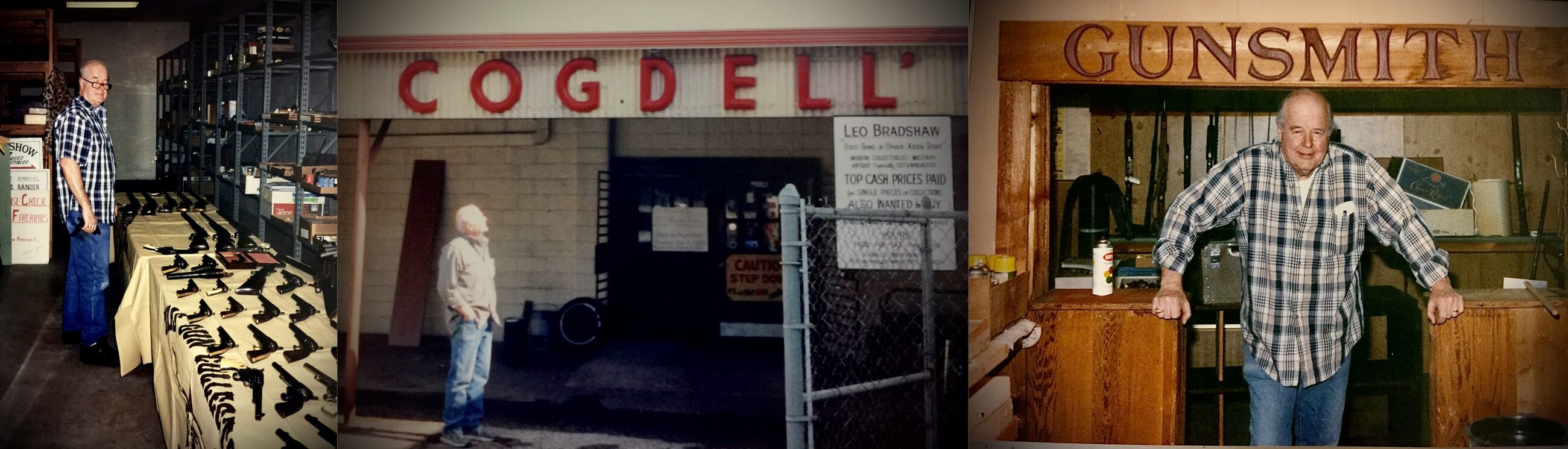
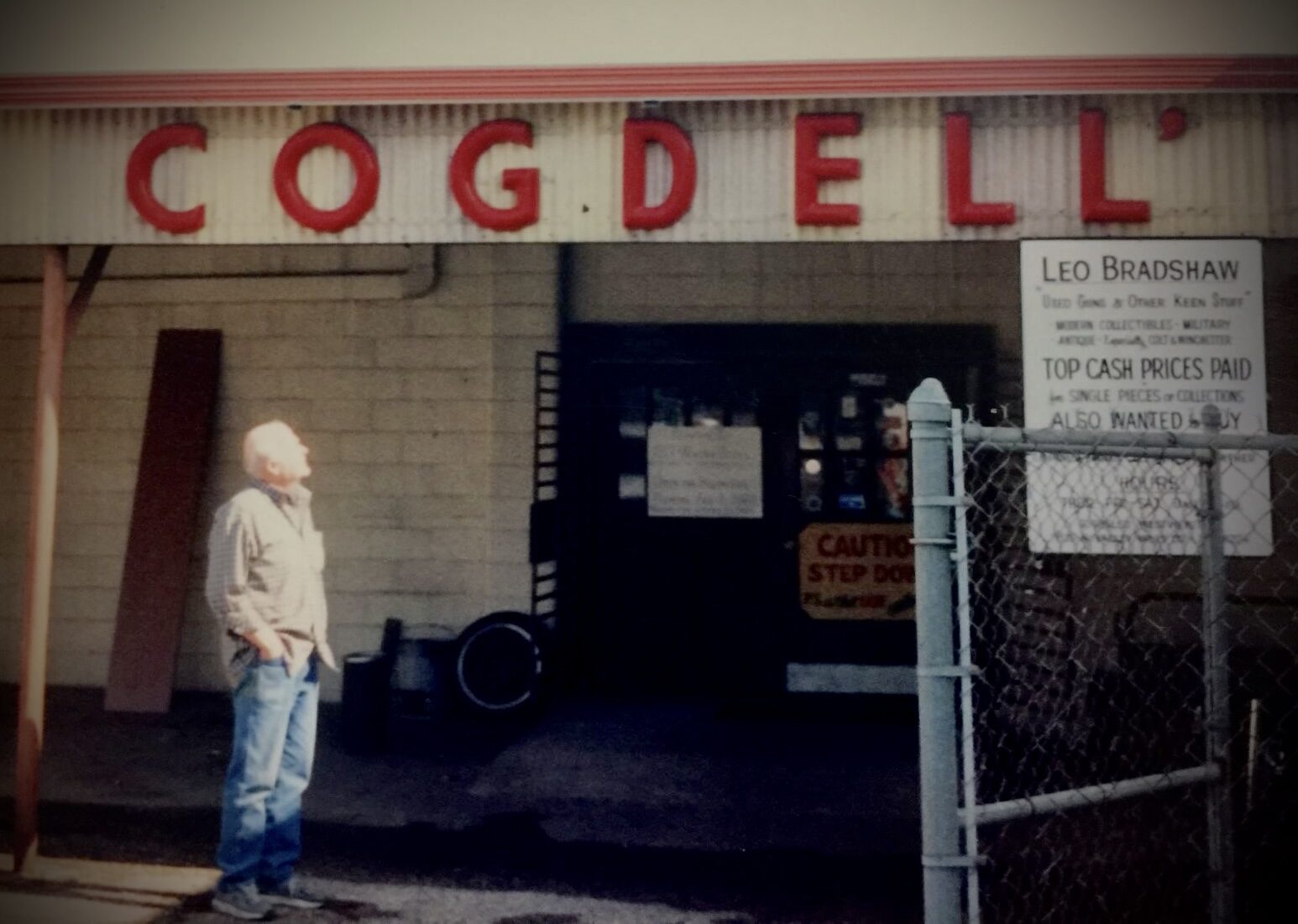
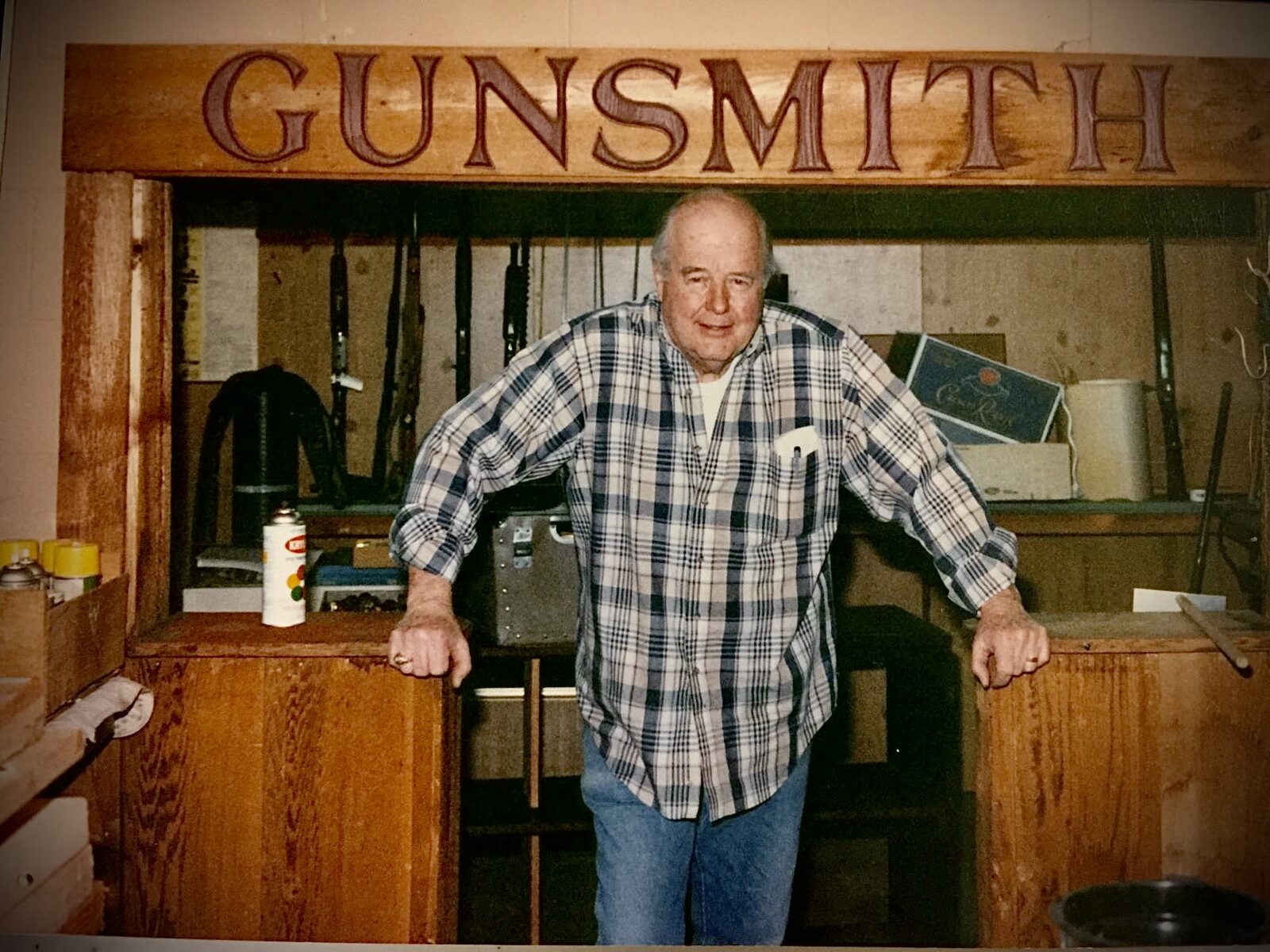
From an early age Leo loved guns. Much to his mother’s surprise, he ordered and received his first gun through the mail when he was nine years old — what would become a lifelong passion had begun. While a student at Baylor, he worked part-time at the family appliance and furniture business of Cogdell’s on Valley Mills Drive in Waco. In June 1954, Leo suggested to his father that space from a recent expansion of Cogdell’s be used for a gun shop. Leo Sr. agreed, provided Leo Jr. would stay and run it. By September that year, the gun shop was up and running with Leo at the helm. The foundation for his life’s work was in place.
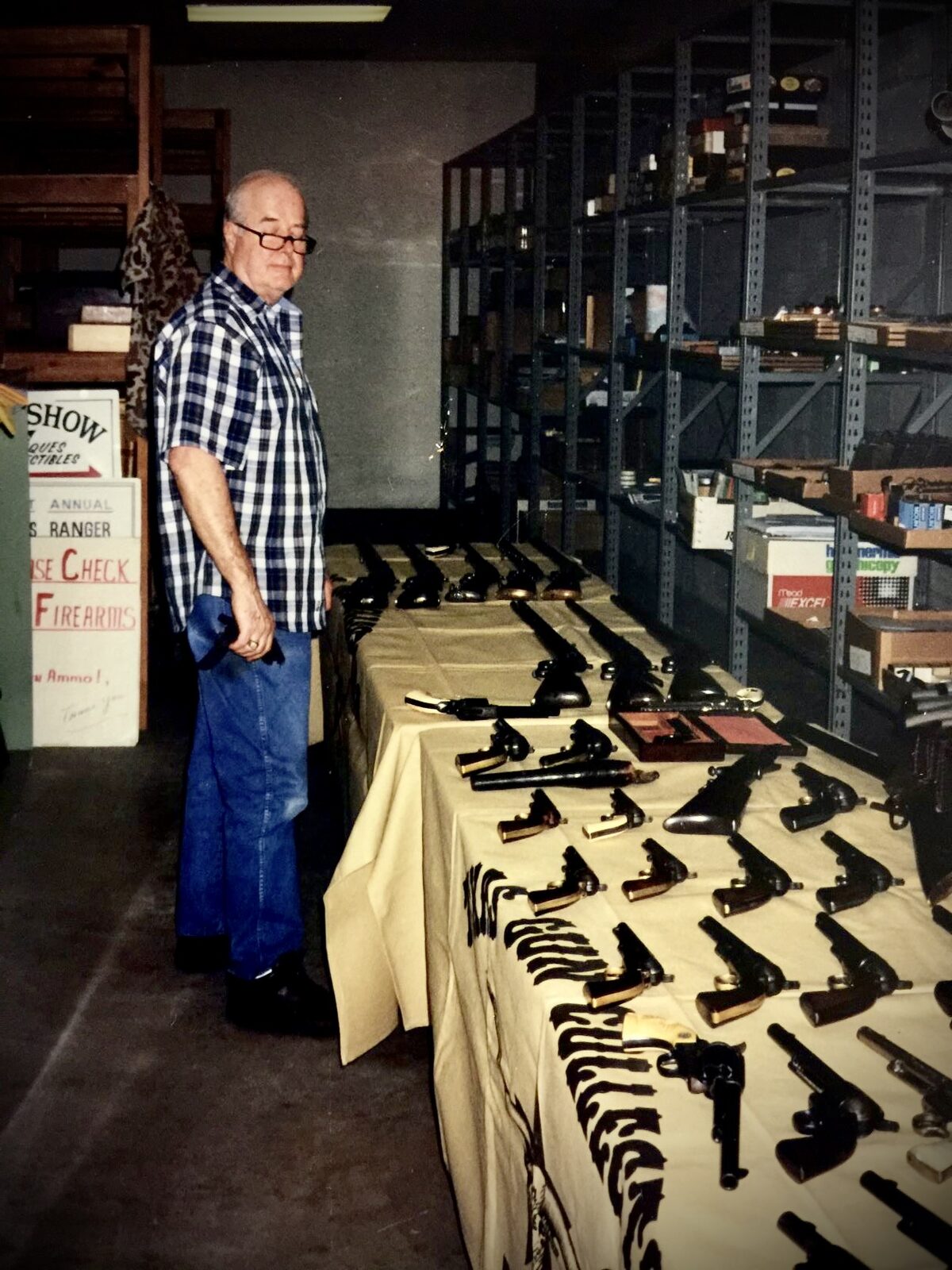
He continued to operate the gun shop at the Valley Mills location for 49 years. In 2003, he moved the shop to the Wooded Acres location, where he operated until his death — bringing his total years in the gun business to three months shy of 65. In a 2011 Waco Tribune article, Leo estimated that he had sold 225,000 firearms during his career, and said that helping young people select their first shotgun was one of the most rewarding aspects of being in the gun business.
Over the years, Leo became recognized both locally and nationally as a premiere gun dealer, appraiser, and consultant. He generously volunteered his time with local, state, and national organizations for more than 60 years to share his vast experience and knowledge.
Nationally, Leo was a Benefactor Member of the National Rifle Association, a member of the NRA Whittington Center Founders’ Club, and a Ducks Unlimited Diamond Life Sponsor. On the state level, he was a Benefactor Member of the Texas State Rifle Association and a life and charter member of the Texas Gun Collectors Association, which he served as president for three terms.
Combining his love of Texas history and guns, Leo was very active with events commemorating the Texas Rangers. In 1973, he served on the Texas Ranger Advisory Commission and the Commemorative Commission celebrating the 150th anniversary of the Texas Rangers. Twenty-five years later, in 1998, he again chaired the Commemorative Commission for the 175th anniversary. From 1990 on, Leo was an active member of the Fort Fisher Advisory Committee to the Texas Ranger Hall of Fame, where he served as chairperson for multiple terms.
Locally, he was a life member of the Waco Skeet and Trap Club and the Central Texas Rifle and Pistol Club. Leo was active throughout his life with the Waco Chapter of Ducks Unlimited and was named its Sportsman of the Year in 1980. A longtime member of Waco Masonic Lodge #92, he was a member of Karem Shrine, Scottish Rite, and The Royal Order of Jesters, and a member and past president of the Northwest Optimist Club of Waco.
Leo was the last surviving charter member of Cogdell Memorial United Methodist Church. The Cogdell family — Leo’s maternal relatives, for whom the church was named — donated the land on which the first church was built and supported the church through the years. For 47 years, Leo served on the Board of Directors of Community Bank and Trust in Waco.
The family extended thanks for the love, kindness, and support of his many friends — and most of all the wonderful gun buddies Leo loved so dearly, whose frequent visits over his last several months were a blessing and the highlight of each day, and whose stories remain a constant reminder of Leo’s amazing time on this earth. For their loving and compassionate care, the family thanked the doctors and staff at Providence Hospital of Waco, Senior Care of Hewitt, Kindred Hospital of Fort Worth, and Providence Hospice of Waco, with special thanks to Dr. David Hoffman, Dr. Ben LaGrone, and Dr. Steven Burgard of Providence Hospital, and to Rebecca, Dawn, Brenda, and James of Senior Care of Hewitt.
Leo was preceded in death by his parents, Leo Herman Bradshaw, Sr., and Eleanor Rose Cogdell Bradshaw; his brothers, James Edward “Jim” Bradshaw and Bob Cogdell Bradshaw; and his son-in-law, Robert Dennis “Bobby” Smith.
Leo is survived by his wife of 41 years, Beverly Jean “Jeannie” Bradshaw, of Waco, who is the mother of their daughter, Brande Colt Bradshaw Draper; his children, Brande Colt Bradshaw Draper and her husband, William Adams “Will” Draper, of Austin, Leo Herman “Trey” Bradshaw, III, of Waco, Dana Rose Smith of Boerne, Karen Rezi Maxwell and her husband, John Pat Maxwell, of Boerne, and Andrew Thaxton “Andy” Bradshaw and his wife, Margaret Lowry, of Fort Worth; his sister, Patricia Ann “Pat” Edge of Houston; his sisters-in-law, Ouida Massey Bradshaw of Fort Worth, Janice Bradshaw of The Woodlands, and Jayne Hicks of Waco; his sister-in-law, Rebecca Bosley and her husband, Jim Bosley, of Kirvin; his brother-in-law, James Richard “Dicky” Thornton, Jr., and his wife, Lynita Thornton, of Wortham; and his first wife, Audra Rose Bradshaw of San Antonio, who is the mother of Trey, Dana, Karen, and Andy.
His grandchildren are Julia Frances Draper, William Adams Draper, Jr., William Robert Bradshaw, Richard Ross Bradshaw, Brandon Travis Smith, Charles Lowry “Charlie” Bradshaw, and James Lowry “Jay” Bradshaw. He is also survived by numerous nieces and nephews and great-nieces and great-nephews, and by his longtime employee, Patsy Berry, and her husband, Bill Berry, of Waco.
The Board of Directors of Community Bank and Trust and Leo’s beloved Spit and Whittle Club served as his honorary pallbearers.
My references to Leo are based on the short time I was calling on him after he had sold the front end of Cogdell’s to the guys from Tyler. Most of the things I remember could not be retold anywhere near as funny as we thought they were, or as much fun as it seemed at the time — or in mixed company — and are most certainly not fit for public consumption.
I was around some about the time his daughter, Miss Brandywyne Winchester Bradshaw, was born, and Leo was certainly a proud papa — and of course everybody made fun of Leo naming the baby girl after his favorite brand of guns and ammo.
You really need to track down one of Leo’s oldest cronies from Richardson named J.R. “Jim” Crook, or maybe the guy who owns Collectors Firearms on Fondren in Houston, whose name escapes me. I ran into J.R. about 25 years ago — the last time I saw him — at a hotel breakfast bar in Waco, and J.R. was big-time hungover after spending the previous evening out late with Leo. J.R. built a business on Arkansas whetstones into a small string of mall retail knife shops and a multi-state, multi-line wholesale business.
Lots of guys from that era are gone now — guys I knew from the wholesale and retail side of the business. Larry Richmond, whom I had partnered with at the distributor, later became a U.S. Coast Guard admiral and chief of staff at CG Station New Orleans. Dudley Grounds repped Weatherby for 25 years before I got him on with Glock after I turned it down in ’88 — Dud was my closest friend and competitor in the gun business, and we traveled together some as SAKO and Weatherby reps. Harold Bramer, aka “Grumpy,” was famous for 40-plus years of small gun-gadget trinket lines and Doskocil gun cases. There was the always-snotty Ron Moore from West Virginia, retired to Florida. Kenny Sedlecki and his partner Tommy Oliver from Smith & Wesson are both gone from cancer, but they were champion target shotgun guys I’m sure Leo would remember — Kenny was honored at the Dallas Safari Club for his work introducing young people to the shotgun sports.
I see Gary Grant from Wylie sometimes behind the gun counter at Bass Pro in Grapevine, after his brush with a severe brain medical issue — he’d had Leupold and Nosler for 30 years. Rick Snow from Houston, Joe McBride from Austin — these are all people who knew Leo lots better than I did, and more. I was and always have been proud to call Leo Bradshaw a friend, just like most of the folks I’ve mentioned, who are people of merit. On and on, time takes its toll.
I am 68, down to two or three lives left of my allocation of nine, with a heart full of four stents so far that the docs say are just a temporary band-aid for the triple bypass I need to escape the Big One. I have a chronic case of skin cancer that has put me on the table eight or nine times for more than a simple dose of the freeze bottle, including rebuilding the left side of my face. There was the removal of a non-malignant, 26-ounce, softball-sized tumor off the right side of my neck that the PT folks said had crippled me for life — NOT: it just took 18 months of rehab using a portable, battery-powered muscle-and-nerve stimulator three hours a day instead of the prescribed 30 minutes, wearing out three sets of 24-month-life batteries, along with open, unlimited access to way more serious scrips of pain pills than any of the three attending docs knew I had. Add a pre-diabetic blood sugar level, and a ruptured eye — I accidentally stuck a piece of steel through it — that was “fixed” with a cornea transplant and lens implant and has resulted in a chronic case of keloid scar tissue that won’t heal 12 years later. And, and, and — yadda yadda.
The one common denominator with this crowd, if you look close at us, is that we ALL believed we were ten feet tall and bulletproof, and lived that way 24/7 without thinking about it. Even Ray Murski died last year — in Bosque County, I believe — in a car wreck going home to Dallas from the deer lease. Ray was semi-retired and too rich and successful to die in a dumb car wreck.
God bless you for the project.
Ron Virnelson
Schoellkopf Sports, Carrollton, TX — 1976–1982
Stoeger Industries, Southwest Regional Sales Manager — 1982–1988
Insurance sales for home, auto, life, business, marine, RV & big-boy toys